

Poker Games – Top 10 Poker Variations 2024
 Reviewed by WSOP Winner Chris ‘Fox’ Wallace
Poker is one of the most exciting games in the world – and there are countless variations to keep you entertained. Below we’ll run you through 10 different poker games and how they work. Our comprehensive guide to the top 10 types of poker will have you ready to play in a matter of minutes.
From Texas Hold’em to Chinese Poker, we cover everything you need to know about the most popular types of poker games. We’ll also look at lesser-known poker variants, like Razz, which are frequently included in mixed games such as HORSE or 8-game.
GAME 1
Texas Hold’em
They say Texas Hold’em takes five minutes to learn and a lifetime to master and it’s true! Hold’em is by far the most popular poker game in the world and we’re here to guide you through the basics of the game.
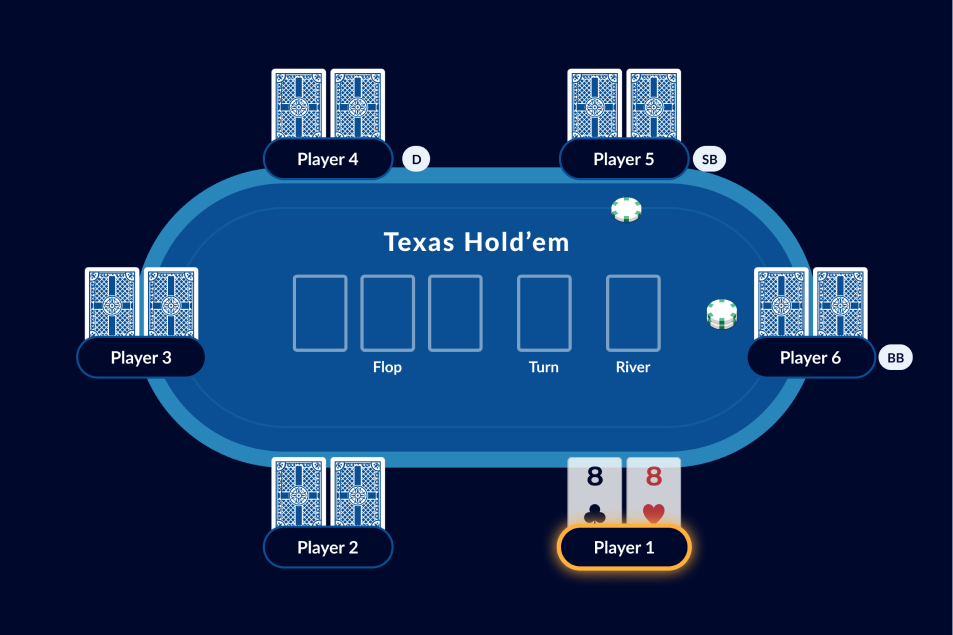
A typical Texas Hold’em table set up showing a game between six players.
A typical Texas Hold’em table set up showing a game between six players.
How to Play Texas Hold’em
Hold’em is easy once you know the basics. Let’s go through a hand together to see exactly how it works:
-
The player to the left of the dealer is the small blind and the next player to their left is the big blind.
-
Each player is dealt two hole cards face-down and the first round of betting begins. Players can look at their cards and call the big blind, raise, or fold.
-
The dealer places three community cards face-up in the middle of the table (The Flop), followed by another round of betting.
-
The dealer adds a fourth community card (The Turn) followed by more betting, and a fifth (The River) followed by the final round of betting.
-
Any players who are still in reveal their hands. The winner is the best five card hand using any five of the seven available cards (two-hole cards and five community cards).
Texas Hold’em Pros and Cons
Pros
Cons
If you feel ready to play Texas Hold’em already, you can check out our list of the best online poker sites.
Play Texas Hold’em for free at our no-risk practice tables! No downloads, deposits or accounts needed.
GAME 2
Pot-Limit Omaha
Pot-Limit Omaha (PLO) is a favorite of Europeans and high-stakes players because it has tons of action. In PLO poker, as it’s also called, you get four-hole cards and can bet and raise equal to what’s already in the pot.
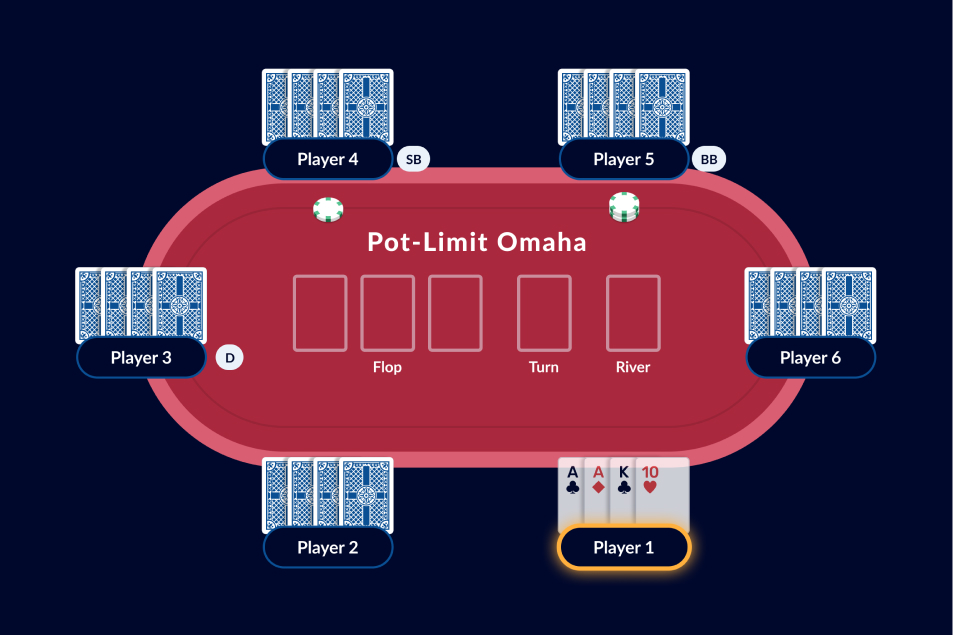
With its four-hole cards, Pot-Limit Omaha offers players more ways to spice up your game.
With its four-hole cards, Pot-Limit Omaha offers players more ways to spice up your game.
How to Play Pot-Limit Omaha
Pot-Limit Omaha plays a lot like Hold’em but there is a key difference to be aware of:
-
In PLO the blinds, community cards, and betting rounds are the same as Hold’em. Betting limits are defined by the amount already in the pot – it’s not possible to raise by an amount greater than the full pot size.
-
However, in PLO, you have four-hole cards and must use two of them along with three community cards to make the best five-card poker hand.
Pot-Limit Omaha Pros and Cons
Pros
Cons
How to Calculate Pot Size for Bets and Raises in Pot-Limit Omaha
In PLO poker the maximum amount you can bet and raise is what’s in the pot plus your call of any outstanding bets. Calculating how much you can bet and raise can be tough even for experienced players. Follow our useful steps to make it easy.
- First, multiply the last bet by three and then add any other remaining wagers and what was already in the pot.
- For example: If there’s $10 in the pot and you’re facing a bet of $5 with one additional caller, the maximum you can raise to is $30 ($5 X 3 + $5 +$10 = $30).
PLO Poker vs No Limit Texas Hold’em Poker
If you’re an experienced player coming from No Limit Hold’em (NLH) and transitioning to PLO poker, there are several things you should be aware of before you dip your toes into the exciting PLO waters:
- High pairs in PLO are not the same as high pairs in NLH.
This comes down to hand equities being similar. AAxx vs any four cards is only a 65/35 favorite. Although a sizable favorite, it’s nowhere similar to NLH where AA is an 85/15 favorite against any two cards.
- Position is even more important.
In PLO poker it becomes right to play a lot of hands in position, even more so than in NLH due to similar preflop equities. Whenever you can go to the flop with 35%+ equity against an opponent and you have position and lots of money left behind for post flop, it’s hard not to play your hand profitably.
- High connected cards have more value than low connected cards.
Although equities are similar you need to be aware of a hand’s post flop playability. While connected cards and suited cards add to your equity, what’s really valuable are cards that make nut draws. A nut draw is when you don’t have a made hand, yet you are drawing to the best possible hand. High connected cards make nut straight draws; high flush cards make big flushes and flush draws.
- Hand values are not the same.
This is simple – because you have four cards instead of two there are many more hand combinations. In NLH, hands like two pair are strong hands – but in PLO two pair is usually a bluff catcher at best.
- Preflop looseness.
In PLO poker, because of the similar preflop equities, you can profitably play a lot more hands than you might in a NLH game, especially from late position.
GAME 3
Seven-Card Stud
Rewind just a few decades and Seven-Card Stud was the most popular poker game in America but has since been surpassed by faster and more exciting variants.
If you’ve only played Hold’em, Seven-Card Stud will take some getting used to. There are no community cards and it’s almost always played with fixed betting limits.
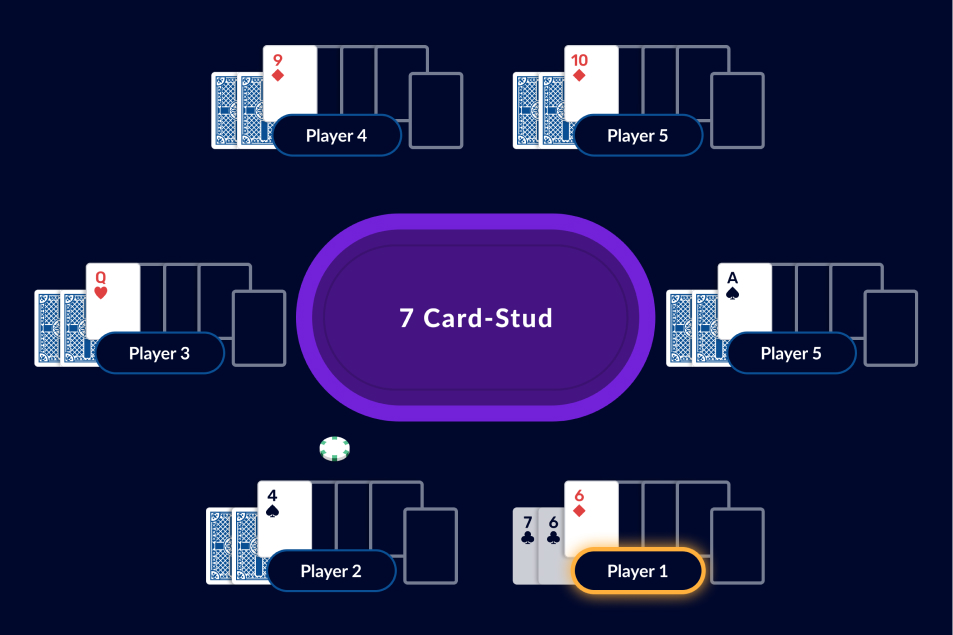
A typical Seven-Card Stud setup with one card face up from the offset.
A typical Seven-Card Stud setup with one card face up from the offset.
How to Play Seven-Card Stud
-
Each player pays an ante and receives three cards, two face-down and one face-up.
-
The player with the lowest face-up (door) card must “bring it in” or “complete”. If the ante is $1, for example, the bring-in is usually $5 and it’ll cost $10 to “complete”.
-
The betting continues clockwise with each player getting the option to fold, call the bring in, or raise.
-
After everyone has taken their turn, a fourth card is dealt face-up to each player. This is called fourth street.
-
Betting now begins with the player showing the highest-value hand with their up-cards and moves clockwise.
-
This pattern continues with face-up cards on fifth street and sixth street.
-
On seventh street everyone receives a card face-down, followed by the final betting round.
-
Anyone still in the hand shows their cards and the best five-card poker hand wins.
Seven-Card Stud Pros and Cons
Pros
Cons
Other Tips for Seven-Card Stud
- Position is a big advantage in Seven-Card Stud – so use it.
- Bluffing is difficult but can be done.
- Seven-Card Stud involves lots of betting and poker strategy – so play cautiously.
Seven-Card Stud is available to play at PokerStars!
GAME 4
Razz
If you don’t know how to play Seven Card Stud, check out the rules in the previous section, it’ll to make learning Razz poker way easier. Razz poker is a lowball game which means the card and hand rankings are flipped upside down.
The goal in Razz poker is to make the “worst” (lowest) possible hand according to traditional poker hand rankings.
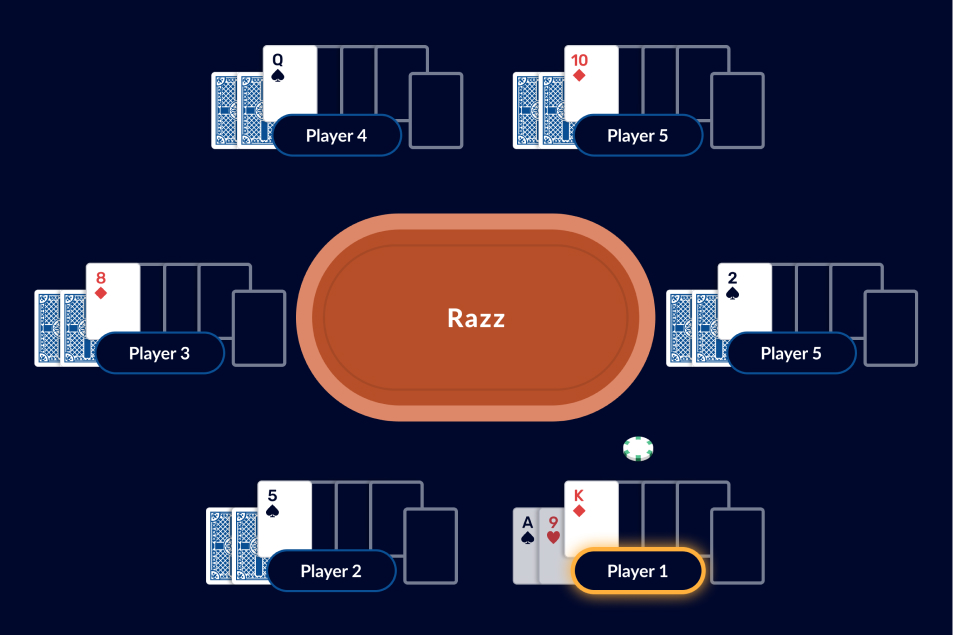
Like Seven-Card Stud, Razz begins with one card face up; albeit with different rules on who ‘brings it in’.
Like Seven-Card Stud, Razz begins with one card face up; albeit with different rules on who ‘brings it in’.
How to Play Razz Poker
-
Aces are low in Razz and straights and flushes don’t count. Therefore, the best possible Razz hand is a five-high (5-4-3-2-A).
-
Gameplay works the same as Seven Card Stud except for the player with the HIGHEST door card brings it in. On later streets betting begins with the player showing the LOWEST traditional poker hand (the best lowball hand).
-
Just like Stud, Razz poker is a limit game and follows the exact same betting patterns including antes, bring-in, completion, small bet and a big bet.
-
After the final round of betting on seventh street, the player with the lowest five-card poker hand wins.
Razz Pros and Cons
Pros
Cons
Razz Strategy
- Be very picky with your starting hand selection.
Any starting hand with only cards in the wheel (ace through five) is very strong.
- If other players are showing higher cards that you aren’t interested in, that’s good.
If they’re showing cards that you know you want to draw, that’s bad. If you see cards that match your own, that’s especially important, because it means you’re much less likely to get a pair.
- Utilize your door card.
If you have lowest showing door card and the action is folded to you, it is typically correct to raise, even if your hole cards are significantly weaker and taint your absolute hand strength.
Razz is available to play at PokerStars!
GAME 5
Omaha Hi-Lo
If you’ve never played a Hi-Lo poker variation before you’re in for a treat. In this kind of game, the pot is split between the highest hand and the lowest hand.
Once you’ve learned Pot-Limit Omaha, understanding Omaha Hi-Lo is really easy. Omaha Hi-Lo uses blinds, each player gets four cards and there are four betting rounds with a flop, turn, and river. At the end of the hand, the pot is split between the best high hand and the best low hand.
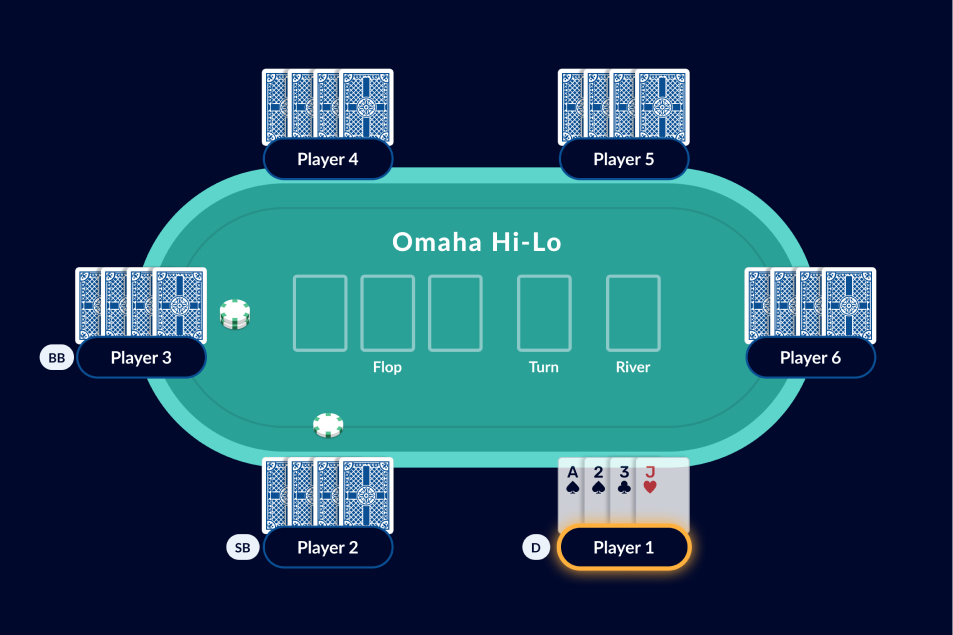
Omaha Hi-Low offers a complex strategic approach for advanced poker players.
Omaha Hi-Low offers a complex strategic approach for advanced poker players.
How to Play Omaha Hi-Lo
-
Each player makes two separate hands, each using exactly two of their hole cards and three of the board cards (one high hand and one low hand). A low hand cannot contain any pairs, or cards higher than an 8.
-
If you have both the best high hand and the best low hand you get the entire pot which is called “scooping”.
-
Omaha Hi-Lo often uses fixed betting limits.
Omaha Hi-Lo Pros and Cons
Pros
Cons
GAME 6
2-7 Triple Draw
Now that you’ve learned games that use low hands like Razz and Omaha Hi-Lo, it’s time to unveil another excellent lowball game. 2-7 Triple Draw is a limit game that uses blinds but no community cards. It’s straightforward once you know the basics.
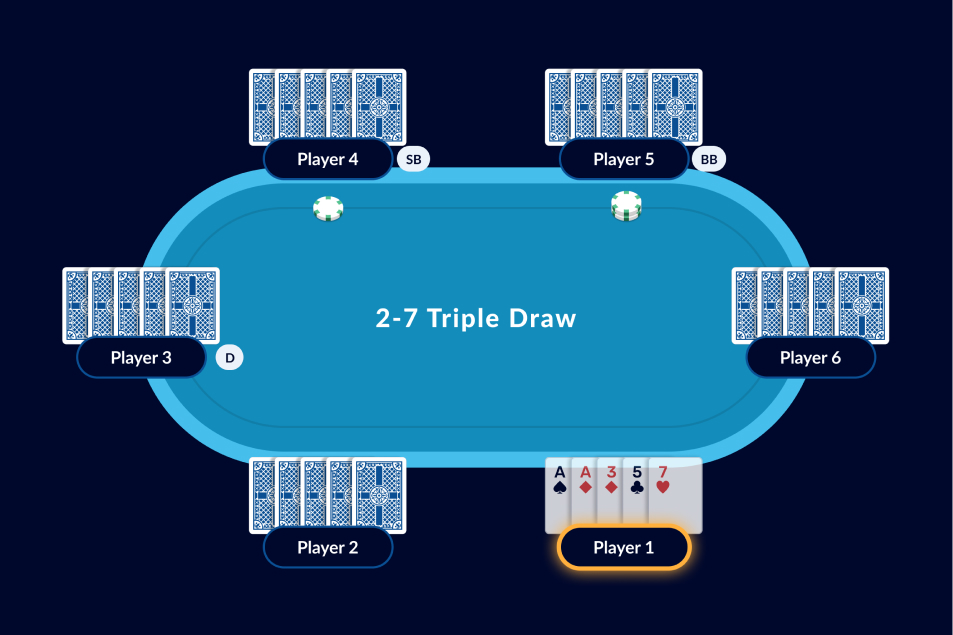
2-7 Triple Draw offers players a fun way to bluff and use mind games on their way to victory.
2-7 Triple Draw offers players a fun way to bluff and use mind games on their way to victory.
How to Play 2-7 Triple Draw
-
The object of the game is to make the best possible five-card low hand.
-
Aces are high and straights and flushes DO count. Therefore, the best hand is an unsuited 2-3-4-5-7.
-
2-7 Triple Draw uses a dealer button and blinds just like Hold’em.
-
Each player is dealt five cards and betting begins with the player to the left of the big blind.
-
After the betting rounds, each player can draw up to five new cards.
-
There are four betting rounds and three draws. Triple Draw is often played with fixed betting limits.
-
After the final betting round players still in must show down their cards to see who wins.
2-7 Triple Draw Pros and Cons
Pros
Cons
2-7 Triple Draw is available to play at PokerStars!
GAME 7
Five-Card Draw
Back in the day, the first poker game you played wasn’t Texas Hold’em, it was Five-Card Draw. Kids played with pennies and guessed the rules, but for adults, this game still has its charms all these years later. Five-Card Draw uses a dealer button and blinds, just like Hold’em.
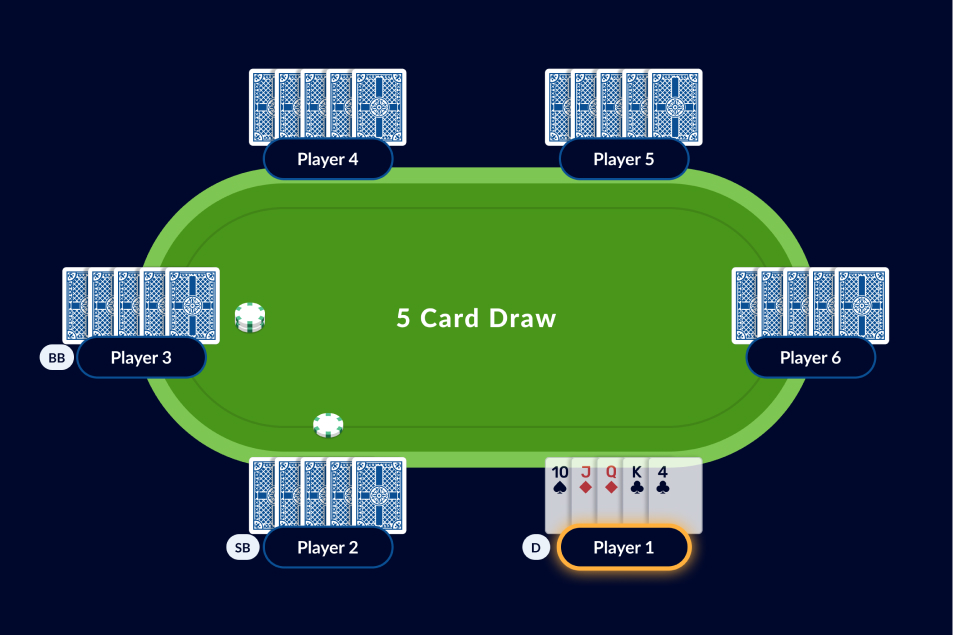
Five-Card Draw is the older brother of Texas Hold’em and still has all its charms.
Five-Card Draw is the older brother of Texas Hold’em and still has all its charms.
How to Play Five-Card Draw
-
Each player is dealt five cards and there’s a round of betting starting with the player to the left of the big blind.
-
After betting, each player can replace a number of their cards, followed by another round of betting.
-
Anyone still in must shows their cards, the best five-card high poker hand wins the pot.
Five Card Draw Pros and Cons
Pros
Cons
GAME 8
Chinese Poker
Chinese poker is a special entry on the list and if you’ve never played it before it’s going to take some getting used to. It’s a lot different to normal poker but it’s so much fun that it’s worth the effort to learn.
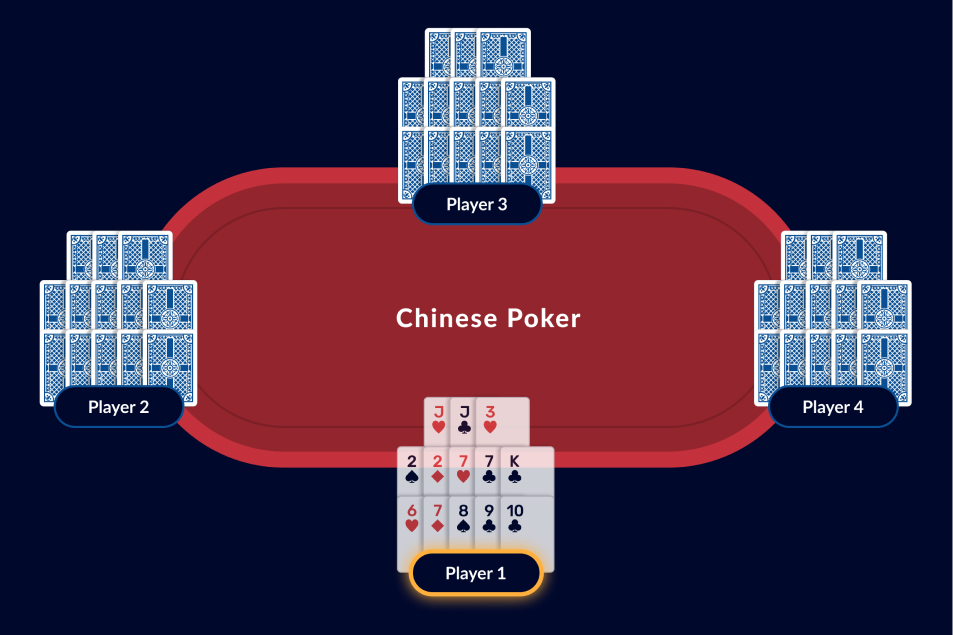
Chinese poker doesn’t include traditional betting rounds.
Chinese poker doesn’t include traditional betting rounds.
How to Play Chinese Poker
-
Chinese poker is played with up to four players.
-
Each player is dealt 13 cards and must arrange them into three different poker hands.
-
The front hand, or top hand, is made up of three cards and must be the lowest-ranking poker hand of the three.
-
The middle hand is made up of five cards and must be a higher-ranking hand than the top hand.
-
The bottom hand is also made up of five cards and must be the highest-ranking hand of the three.
-
Each player scores each hand against the corresponding hand of each other player.
-
Players agree on a dollar value per point before the game. You win one point for each hand you win against each player.
Chinese Poker Pros and Cons
Pros
Cons
GAME 9
HORSE
If you love non-Hold’em games, you’ll love HORSE. The game’s name is an acronym that contains five different poker variations.
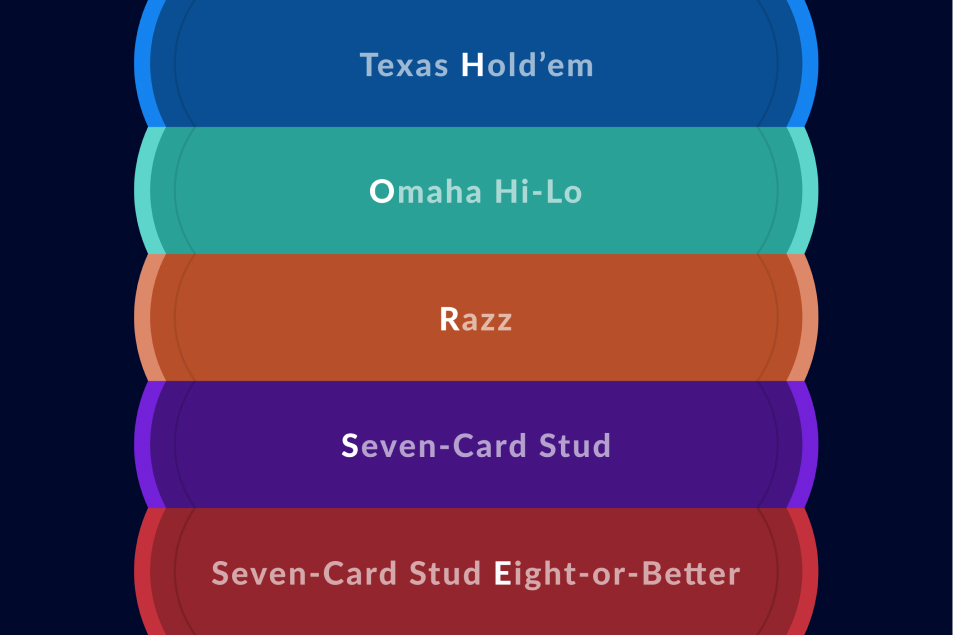
HORSE contains five different poker types and can be great fun.
HORSE contains five different poker types and can be great fun.
How to Play HORSE
-
When you sit down at a HORSE table, live or online, you’ll see a plaque face-up on the felt that tells you what game is being played.
-
The games in HORSE are:
- Hold’em
- Omaha Hi-Lo
- Razz
- Seven Card Stud
- Seven Card Stud Eight or Better (Hi-Lo)
-
Each game is played for one orbit, with fixed bet limits before moving to the next in order.
HORSE Pros and Cons
Pros
Cons
Horse is available to play at PokerStars!
GAME 10
Badugi
Badugi is another special game you’re not going to run into at most home games or casinos and it uses a completely different hand ranking system than you’re used to. Badugi is essentially a lowball game but it has some special features that set it apart from other poker variations.
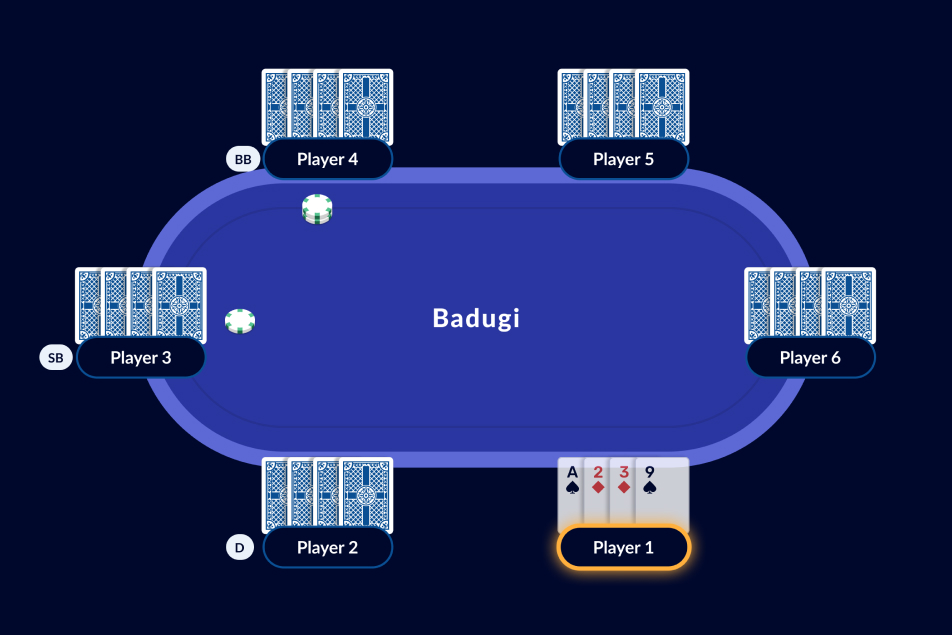
Badugi starts with four cards and relies on bluffing and aggression.
Badugi starts with four cards and relies on bluffing and aggression.
How to Play Badugi
-
Each player gets four cards dealt face-down.
-
Betting begins to the left of the big blind and moves clockwise.
-
After betting, players can replace any cards for new ones.
-
There are a total of three draws followed by a final betting round. Anyone still in the hand must show down their cards to see who wins.
-
The goal is to make the lowest unsuited, unpaired hand. If two cards share a suit, only one can be included in your hand. Any four-card hand beats any three-card hand, and so on.
-
Aces are low so the best possible hand is Ace-2-3-4 of all different suits.
Badugi Pros and Cons
Pros
Cons
Badugi is available to play at PokerStars!
More Poker Guides


Play Texas Hold’em for free at our no-risk practice tables! No downloads, deposits or accounts needed.