Poker Forum - Register
Titan Poker Party Poker Bodog Pacific Poker

Patterns in Poker

PATTERNS

As humans, one of the things we excel in - that our brains are virtually specialized in - is finding patterns. We find them, and we like them. For instance, most of us find symmetry aesthetically appealing, we make out all sorts of things when we look at clouds and we can easily spot which of the two sequences contain a pattern:

1001001001001001001001001

1001101001010110111000101

Presumably, you spotted the pattern almost immediately. It might feel obvious, but it's only obvious because we're virtually hard-wired to detect these things. But, as I alluded to above, we do not only find patterns where ones exist, but we also seek out and think that we spot patterns in random shapes and events, such as clouds. In the case of clouds or how pebbles are organized on the beach, it's mostly harmless. But there are plenty of situations where the brain convinces us there's a pattern where one doesn't exist, and we make very bad choices as a consequence.

The Stock Market Fallacy

Consider the stock market. It's easy to be convinced that if you just pick a stock and watch it for a few weeks, you'll eventually learn between which two intervals the stock fluctuates. Because most stocks are largely correctly valued, the market value usually fluctuates a percent here and there on a daily basis, and so you figure out the mean and you start buying when it's below that value and you sell when it's above. Easy! Right? Except it's our brain playing tricks on us. There's no pattern, per se, there's just fluctuations. And we may make the mistake of thinking that it's time to sell because the stock reached it's "peak" at, say, $21, but that's because we expect it to go down again - and then maybe it doesn't go back down. Maybe it keeps going up.

Or maybe we buy when it's reached $19, but then it keeps going down. We're surprised, because it has "always" gone back up to $20, but apparently not this time. We're surprised, and we're frustrated because the damn thing doesn't follow the pattern it should. But we have no reason to be angry, because there is no pattern.

And Poker?

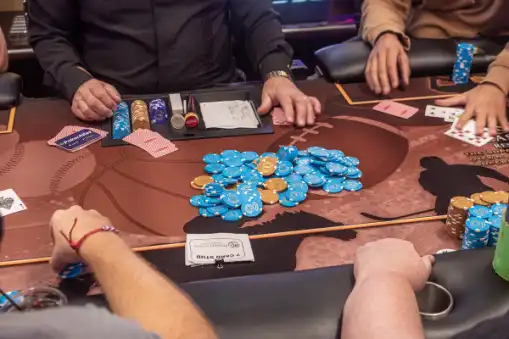
And many make the same mistake in poker. They get up and leave the table if they start off their first couple of orbits running insanely hot, because they don't want to be there when the, in their mind, inevitable bounce-back-effect happens. They think - and be honest, haven't you? - that what comes up must come down, even when it's about luck in poker. If you've won three buy-ins after just 5 minutes of play at the NL cash poker games, wouldn't you think to yourself that maybe you should just call it a night? Take the money and leave?

There are two reasons for why one might do this, and while one of them is somewhat sensible, the other one isn't. It's sensible to take the money and leave if you are

  1. liable to play scared because you don't want to risk losing the profits, so you're in effect on tilt and figure that you should stop playing, or
  2. not a professional player or otherwise dependent on your poker income, but you know from experience that losing a profit that you had for a little while puts you in a bad mood for the rest of the day. The game is not worth being stressed out or upset about, so you get up and feel good about yourself instead.

But if you get up and leave because you "know" that it's just a matter of time before you get the bad luck that you must have coming to you as a result of the good luck you just experienced, then you're delusional. Your brain thinks there's a stock-market like fluctuation pattern that must be followed, when in reality there is no such pattern. There's nothing that makes it more or less likely that you'll hit your next flush draw. There's nothing that says that just because you've won 10 hands in a row, the next one has to go to someone else, or even that someone else is more likely to win it than you.

These events are random, and the individual events - the hands - are not predictable. A session or a lifetime of poker may be predictable, but that's just good old expected value. If you're a winning player, you expect to win money in the next X number of hands. But this doesn't change because you've just had a sick run of 20 hands where you won a lot. The next 1000 hands still have positive expected value for a winning player.

The Expected Value Fallacy

This is something that's a bit hard to swallow for some. If Michael and Sarah both have expected winnings for this year of $20,000, and then Sarah goes on to lose $500 in her first session, whereas Michael wins $500, then Michael is expected to end the year with $1k more than Sarah. Sarah isn't necessarily going to "catch up" at any point because there's is no retribution of that kind. The money that Sarah lost is gone, end of story.

Money lost is gone. Dishing out bad beats doesn't mean that you're more likely than before to have one coming at you.

Poker is Rigged!

The overwhelming majority of people who claim that poker is rigged is falling in a trap set by their own minds; they think they see a pattern where one doesn't exist. They think that a certain poker site deals pocket pairs more often than it should, but that's because their mind is rigged to record features that stand out in some way, in search of a pattern. They notice how they're dealt QQ, then two random low cards, then KK, then two random low cards, and then they "expect" to be dealt AA. If they are, in fact, dealt AA on the next hand, they immediately rush off to make a post in some forum about how online poker is rigged.

Or if you multi-table online, surely you've noticed how often you're dealt a hand like K6 on one table, and then you see that the flop on the other table is K-6-6. Happens all the time, right?

Probably not. It's in fact pretty rare. But the pattern-seeking module in your brain is doing cart-wheels when it happens, so you easily notice and remember those times, but the 99% of the time that it doesn't happen, your brain is quiet and you simply forget all about it.

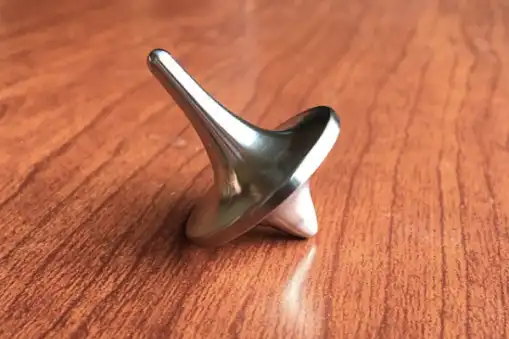
There Is No Spoon

... and there is no pattern. These things are random, and while randomness might be hard to intuitively grasp, I think you will win more money at poker and sleep better at night if you consciously remind yourself that what you think you're noticing to be a pattern is just a figment of your imagination. Make decisions based on the information you have about the current situation, but leave out things you think you can deduce based on how the past 100 hands have gone. Other than to serve as reads on your opponents, the outcome of those hands no longer matter.

There is no pattern.

Return to the Poker Strategy Articles Contents page.


Players Only Poker
DEPOSIT USING CREDIT CARDS - GET A $1000 BONUS - US FRIENDLY SITE!


Copyscape   Poker En Ligne Online Poker Poker Online
All original site contents ©Cardschat.com 2004-2009. Reproduction is prohibited.