Poker Forum - Register
Play Online Poker Games at US Poker Sites - Get the maximum Full Tilt Poker Referral Code and PokerStars Marketing Code exclusively at Cardschat.
Party Poker Titan Poker PokerStars Bodog Pacific Poker

Subtle Gear Changes to Improve Your Poker Game

"If you can't find it, grind it."

When I was a kid, learning to drive a standard transmission vehicle, my dad said something that has stuck with me to this very day. When trying to get that old, beat-up 1955 Chevrolet pickup into third gear from second, it would make a terrible grinding noise to which my old man would reply, "Son, if you can't find it, grind it!"
I would never forget that statement, and I often relate it to my poker game. This may sound a bit rediculous, and contrary to what you may be thinking, it has more to do with the gear changes, than the actual grind, no pun intended.

To be a sucessful poker player, one must be able to assess his/her situation, adapt to their current surroundings, and make these subtle "gear changes" all while in the midst of a war over their chip stack. It can oftentimes be very difficult to step out of the box one builds for themselves and into a totally new style of play in the middle of a game, but this is exactly what most professional poker players do on a regular basis. If you have watched any amount of live poker, and I don't mean just final table action of the WPT on the Travel Channel or the WSOP on ESPN, you have likely watched this happen more times than you can count. Only with the introduction of the hole camera equipped poker tables have we been allowed to watch these professionals at work. Being able to make these adjustments to your game on the fly like this, are vital to your success, whether you play internet, cash games, or tournament poker.

Introducing this strategy of subtle "gear changes" into your game is important for several reasons, but the most important one in my opinion is that it prevents you from becoming predictable at the poker table. One of the biggest mistakes players make is that they get stuck in a rut of only playing premium hands. While this is solid strategy if one wishes to play a super-tight game, in the long run, the predictability of it is going to make other players at the table take notice that when you raise a pot, you are sitting on a monster, and will influence their decision to fold rather than gamble with you. You are in effect, chasing away your action. If you are viewed as an extremely tight player, only playing premium hands, you are going to get fewer callers with small pocket pairs and suited connecters based solely on your reputation. To prevent this from happening it is beneficial to you, and your bankroll, to play some of the better marginal hands in certain situations. When doing this, always be aware that in the event that you do not improve your marginal hand after the flop, it is best to get away from it and live to fight another day.

Pokerstars

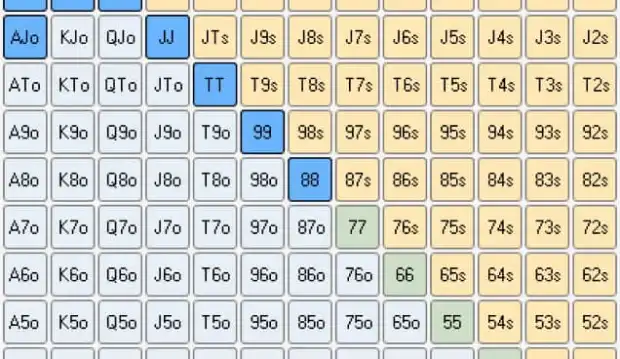
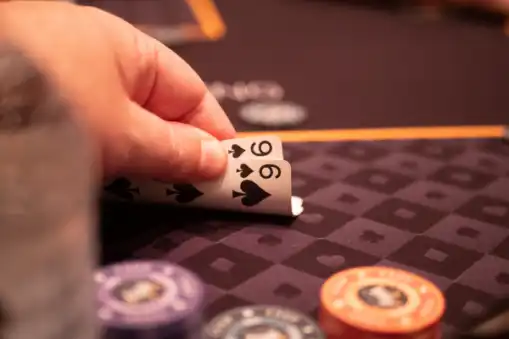
I like to play small pocket pairs and suited connectors above 8's. Now, this isn't to say I play every pair of crabs (pocket 3's) that I am dealt, but if I see an opportunity in late position with just a limper or two before me, I like to bring hands like this in for a little raise. I rarely, if ever, cold call with these hands. You always want to know where you stand in the hand, and bringing these hands in for a bet such as 3 times the big blind in a no-limit game or making it two-bets to go in at a limit table will give you more insight into what the other players are holding. Cold calling is only going to allow someone else to see a flop for free and chances are that they are holding as good or better cards than you. When faced with a re-raise before the flop in this situation, cut and run, which brings me to my next point. Another important factor to keep in mind is to resist the urge to be married to your hand. Know when to let it go. To be a successful player at any level, you have to be able to recognize when you are beaten and have the ability to let the hand go allong with whatever chips you have in the pot, and move on. Pick your battles wisely, because opening up your game with these changes can be detrimental if you are the kind of player that can't handle the swings of loosening up your play, or can't throw a hand away.

Another thing to remember when employing this strategy is to keep an accurate accounting of your chip stack, the chip counts of all the other players at the table, and the structure of the blinds and antes. If you are on a short stack, the last thing you want to do is get involved in a bunch of pots with marginal hands when a small raise is equal to a good percentage of your stack. It is for this reason that late position is an advantage, especially short-stacked. When chip leader or second in chips, making these changes becomes easier. When you find yourself in that position you can afford to throw out a lot of small bets in the hopes that you will either run everyone else out of the pot with a marginal hand and pick up the blinds, or see a flop cheaply. Hopefully post-flop you will have a decent drawing hand such as 4 to a Flush, an inside or open-ended straight draw, or a made hand like a set (if you started with a pocket-pair). It is these hands that are going to win you more, and bigger pots than you're pocket cowboys (Kings), or Aces. The players in the pots with those big pairs are going to hate to throw away their hands when the board comes 6,8,2, so they'll stay in the pot and cry a river of tears when you show down a pair of deuces for a set.

Playing middle to low pairs and suited connectors can be a huge benefit to your game if played correctly. In the first installment of this article, I recommended calling with these marginal hands from late position when one or two players have limped in before you, and then folding them to another raise over the top of your initial call. While this is a sound strategy, and one that I use quite often, there are other ways to play these hands that can result in bigger pots. However, with the chance to win bigger pots comes bigger risk. You will be putting a larger portion of your stack at risk, but the risk versus reward ratio is good.

Aside from the method discussed here and in the previous article of the same title, other ways to play these hands are geared more toward the advanced player. It is permissible in some situations for me to call a bet in front of me with a small pair or suited connectors. I tend to keep my play of suited connectors above 8's only occasionally going down as low as 6-7, or 7-8. This is where the game can get confusing. It seems like I am contradicting myself, and in some cases that my be so. Hold-em' is a game where there are almost no absolutes and in situations like I am describing, you must have a good grasp on the table and rely heavily on your reads to make decisions. The reasoning behind staying with the suited conectors over 6's at minimum, is due to the fact that in the event you do make your hand, your flush and straight will usually be on the lower side of the spectrum. For example, if you play 4d-5d, and the flop comes three diamonds, you made a flush, but it is a weak and very voulnerable hand to anything higher. When playing a hand that low, you would rather make a straight than a flush. Not that a flush is a bad hand, its just too voulnerable to other hands like I said. Even making a straight with a hand of 4d-5d with a board of 6-7-8, you are weak to a player with 9-T, for the higher straight. Again, its all about changing gears and altering your play. Just that little extra twist on playing these hands can up your EV.

Yet another strategy for playing suited connectors is to bet strong on them early in a session. One of two outcomes happen, you either hit the flop and win the hand, or showdown a loser, leaving people at the table wondering why you 3 bet rags. This one play, made early in a game may be enough to bring you action for several hours at the table. You may well have lost the first pot, but the action it brings to you is worth far more chips in the long run. This action gives you a chance to sit back and play a little tighter while people call you down with marginal hands because of the one play you made early on. Just be sure to remember that after you make a play with suited connectors and you don't have to show them down, DONT. When you have forced the action out of the pot with a good sized bet, fold your cards face-down into the muck. Resist the urge to "show off" your bluff. Continue this pattern until you get called down and are busted trying to make a play. Now is the time to show your low suited connectors, with the sheepish "you caught me" look in your eyes. Be careful for a while after this and remember to tighten-up your play for a while, sticking to the top 6 hands or so pre-flop, so that when you do bet out nice before the flop, nobody puts you on a really good hand and you can get lots of action.

Remember, in poker, the bottom line is value. You must constantly ask yourself, "What is the expected value of the play I am about to make?" Will losing three bets or three times the big blind here, make me more money over the course of the night, or should I just fold? You always want to make plays that can work to your advantage over the long run. Keep your focus on the bigger picture. That is why I place so much emphasis on not being trapped into one style of play in my own game. If I can win (or even lose) a pot here and there on a marginal hand, there is always that shred of doubt in my opponents mind that I may be on a draw or raising with a poor hand, which will intice calls and bring me more money. These changes in your game do not and are not designed to be permanent, just throw them in here or there to keep people guessing, then go right back to playing in your comfort zone and watch the pots grow.

Article written by diabloblanco.

Return to the Poker Strategy Articles Contents page or see our Poker Games page.

Players Only Poker   


Copyscape   Poker En Ligne Online Poker Poker Online
All original site contents ©Cardschat.com 2004-2008. Reproduction is prohibited.